Showing posts with label economy. Show all posts

Monday, October 10, 2011

Quick look at the bubbles elsewhere

As recommended by a commenter in the last article here is some news about property bubbles in emerging markets (also I want users to post new comments here) - most links from the last 2-3 weeks

Property
BRICS other than India


 Non Brics

  
Other bubbles 

    Developed world economy - Lost decade(s) looming


    Fresh bout of gloom and doom. Remember the last time the world was in this rut was in 1937 and it took a world war to come out of it ...

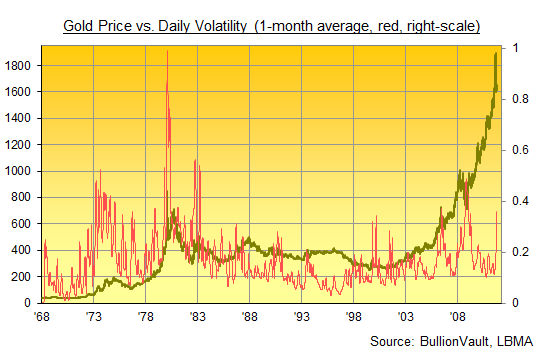
    Gold price over the decades

    USD INR


    Monday, October 04, 2010

    ET interview with Pranab Mukerjee

    Essentially the Finance Minister says that they will not curb FII investment in the near term, RBI will intervene whenever the rupee tries to rise quickly and higher prices are here to stay forever. To quote him "Prices do not go down. In fact they never go down". I foresee the following happening over the period of the next year.

    1. Sensex hits an all time high however retail investor participation remains very weak. The common man has not forgotten what has happened in 2008-2009 and is going to stay on sidelines for atleast few more years before his memory begins to fail.
    2. RBI raises interest rates as stock markets hit record highs. Interest rates begin to pinch the common man who has taken loans for his own house, education, home improvement, credit cards etc. Buyers keep buying houses in all cities except Mumbai where without 1crore of black money nothing moves
    3. Prices of goods keep going up as speculators hoard commodities and producers reduce supply to maximize margins.
    4. Companies try to be efficient to keep up with rising costs. Wages remain stagnant. No Pink slips yet.

    Net effect

    Stagnant wages, Higher loan payments, higher monthly expenses , lower savings, say bye bye to financial independence.

    Welcome to the Matrix. If you take the blue pill, you get to see how deep the rabbit hole goes

    Here is the finance ministers interview

    In an interview with ET Now, Finance Minister Pranab Mukherjee says it’s not a time to put any restriction on the inflow of FII and that the regulators are closely watching the market. Excerpts:

    What do you think are the primary reasons for the market rally we are experiencing currently?

    Always the fear of having some sort of bubble would remain. I do not think this is a time to put any restriction on the inflow of FII. Certain market sentiments are there. Prospective investors are looking into the market, and naturally, India as an emerging economy, along with China and some other Asian economies, is considered a safe destination for investment. One of this upswing is that robust recovery which was expected in North America and Europe has not yet taken place and the IMF forecast has also been revised. We shall have to watch the situation. We reached more than 20,000 in January 2008. So, the stock market fluctuation always takes place, but we shall have to see that it does not have that adverse impact just like a bubble effect.

    Is it safe to presume here that you are in touch with the market regular and keeping a close eye on how the market has really moved today?


    Sunday, May 30, 2010

    India’s Economy Grows 8.6%, Adding Pressure on Rates

    As the economy grew by 8.6%, can the FM please mention the growth of black money, a primary cause of the housing bubble. It should be apparent to everybody that growth of the economy should translate to higher profits for all stakeholders including those in the government who are involved in the approval process. All this underhand money props the value of land and apartments thereby pricing out the common man. India is entering an era which the Japanese became very familiar with in the 90's. India is prosperous but Indian's are not. India has 8.6% growth but Maoists are blowing up trains and killing their own countrymen. It just appears that the Maoists don't think they belong to an country called India, and why would they. They have been neglected all thru the 60 years of independence and now the mining mafia is out uproot them of their own land. There couldn't be a better movie then Avatar to illustrate the plight of the Maoists indigenous people and most probably the Maoists wouldn't even know that someone made a few billion dollars of their cause.

    Interestingly we now have Jones Meghraj and others from the real estate business who are saying that the Lodha's deal in Wadala is unsustainable. A case of the pot calling the kettle black. Nobody likes their territory infringed upon and it appears that Lodha's have entered Wadala causing grief to the existing projects., some of which could belong to their clients.


    May 31 (Bloomberg) -- India’s economic growth accelerated, adding pressure on the central bank to raise interest rates even as Europe’s sovereign-debt crunch threatens the global recovery.

    Gross domestic product rose 8.6 percent in the three months ended March 31 from a year earlier after a revised 6.5 percent gain in the previous quarter, the statistics office said in a statement in New Delhi today. That matched the median estimate in a Bloomberg News survey of 22 economists.

    India and China, the world’s fastest-growing major economies, are weighing the risk of Europe’s debt crisis reducing demand in the market that accounts for a fifth of their exports. For India, the room to pause on monetary tightening is limited because its benchmark inflation rate is more than three times that in China.

    “The biggest threat in India is from inflation and the risk that the economy overheats,” Kevin Grice, an economist at Capital Economics Ltd. in London, said before the report. “This, in the end, would force the Reserve Bank of India to aggressively hike policy rates, which would inevitably bring far lower growth later on.”

    India’s central bank said May 19 that it will raise rates only cautiously even though they are “out of line” with the key wholesale-price inflation rate, running at 9.59 percent. In comparison, China’s $4.3 trillion economy expanded 11.9 percent in the first quarter and consumer prices rose 2.8 percent in April from a year earlier

    More here

    Friday, October 31, 2008

    Loan defaulters rights

    What a change of headlines in the Economic times. From buy before you get priced out, to "How do you pay the loan on the property you thought was going to double ?" . Ofcourse the black money operators don't have to worry ;)

    Defaulted on home loan? Be aware of your rights

    MUMBAI: Almost every home loan borrower has this niggling fear: What if I default? Higher interest rates could hit those with floating rate home loans, triggering a rise in defaults.

    A loan, which could be comfortably serviced at an 8% floating interest rate could cause substantial discomfort after the rates rise to around 12%.

    For some, it could even lead to a problem in repayment. This scary scenario isn’t all that rare. According to rating agency Crisil’s forecast, the share of bad loans is likely to swell to 4% of banks’ total loans in the next two years.

    In case of a default, it is best to approach the lender for an amicable settlement. If all the efforts undertaken for repayment fail, the lender is likely to take over and sell the mortgaged property.

    No doubt, it is very painful to let go of your prized possession, which you may have acquired with your lifetime’s savings. However, in such circumstances, borrowers need to keep an eye on their rights, which provide adequate opportunity to repay.

    As regulated entities, there are certain limits that banks cannot cross. For instance, RBI guidelines do not allow a lender to repossess without proper notice.

    The central bank also has norms that are taken into consideration under specific circumstances. There is a well-laid out procedure for taking possession of the security, provisions regarding a final chance to repay and a procedure for sale. These are in addition to the strict guidelines for recovery agents.

    Usually, banks invoke the provisions of Securitisation and Reconstruction of Financial Assets and Enforcement of Security Interests (Sarfaesi) Act for a quick recovery. This involves a 60-day notice period. But the Act states that such a notice cannot be issued until the borrower’s account is classified as a non-performing asset; that is, when it is 90 days overdue.

    “If the borrower fails to repay even after the notice period, the bank can go ahead with the sale. However, in order to sell, the bank has to serve another 30-day notice mentioning the sale,” Abhay Debt Counselling Centre debt counselling head VN Kulkarni said.

    Further, if your mortgaged home has to be sold, the bank has to publish a notice regarding the same in two leading newspapers specifying the reserve price. The sale has to be a private treaty sale, based on conditions mutually agreed upon by the bank and the borrower.

    “If you feel the property is undervalued, you can raise an objection. However, in case the auction is done through the court, an independent valuer is appointed for carrying out the valuation,” said Poorvi Chothani, proprietor of law firm LawQuest. “You can even sell your own house in order to repay the loan.

    Tuesday, February 27, 2007

    Rising rates and unspoken fears

    A jittery stock market is one of many indicators of a wider sense of disquiet

    SUCHETA DALAL in the express

    The government has obviously hit the panic button over inflation rising to 6.73%, despite its many efforts. Last week, the government set up a special price monitoring cell in the cabinet secretariat and the Prime Minister wrote to all Chief Ministers seeking their help to keep prices in check. That these moves have been widely reported around the world indicates how closely India’s economy, as well as its capital and commodity markets are being watched. Any drastic decision to hike interest rates and slow down the economy in the hope of curbing inflation is bound to impact portfolio flows to India, which would affect several sectors of the economy. Since India is one of the world’s largest producers and consumers/importers of a wide swathe of commodities, our domestic prices and demand-supply factors have an impact on international price trends.

    A few weeks ago, the Prime Minister personally threw open the inflation issue to public discussion, making it clear that he wanted views and feedback from all constituencies. It triggered a massive media debate over controlling inflation at the cost of economic growth. There were equally strong arguments on both sides. However, two crucial stakeholders stayed out of the debate—industrialists and bankers.

    Industry is probably feeling complacent about the liquidity situation. Globally, liquidity is not a problem. There is plenty of money waiting and willing to be lent to Indian companies at excellent rates today. The capital market has, however, turned distinctly jittery, but since this is just a one-week phenomenon, it is probably too early to signify an important turning point.

    But bankers are not so sanguine. They are seriously worried that any further increase in interest rates will cause a severe economic setback and that the implications of such an action are not fully understood by policymakers. There are already indications of the speed with which interest rates could rise in the bidding for short-term deposits. Last week, a 100-day fixed deposit by Gas Authority of India Ltd received seven bids from banks, all willing to pay over 10% — they included State Bank of Patiala, which offered 10.51%, Bank of Baroda (10.26%), Union Bank (10.20%), State Bank of Hyderabad (10.03%) and IDBI Bank, Allahabad Bank and ICICI Bank offering 10% while Punjab National Bank offered 9.95% and HDFC Bank offered 9.4%. ICICI Bank reportedly offered 10.10% for a 30-day deposit of Rs 150 crore to Unitech and there is talk of a Rs 1,000 crore deposit having been snapped up for 11%. If this is the situation today, then another hike will cause interest rates to go haywire.

    The Indian economy is bubbling along based on increased consumption, thanks to higher earnings as well as the availability of easy personal loans and finance for everything from white goods to family holidays. That will change. High interest rates will slow down fresh borrowing, while delinquencies on existing personal loans could increase if money has gone into the stock market, which was exceedingly nervous last week. On the mortgage front, borrowers are already sore at the repeated increase in interest rates. So far, there were a few mitigating factors such as rising realty prices and increased household incomes. Lenders also had some cushion to avoid hiking equated monthly instalments (EMI) across-the-board, because the average borrowing age has dropped sharply from 40-plus to the late 20s. Another interest rate hike could force banks to hike EMIs as well.

    Rates could rise. There are already indications of the speed with which interest rates could rise in the bidding for short-term deposits. Last week, a 100-day fixed deposit by GAIL received seven bids from banks, all willing to pay over 10%
    The trend in realty company shares, which have dropped anywhere between 20-35% in the last three weeks, suggests that this bubble is starting to lose air. A sure sign of rising panic is the fact that bankers were suddenly talking about the downgrade of a personal loan pool of a private bank by Crisil. This had happened over a month ago, and the rating agency insists that it does not signal a trend so far.

    If the realty bubble bursts and the capital market goes into a deep correction, the impact is bound to slow down the growth of a wide cross-section of manufacturing companies. This, in turn, will have a domino effect on foreign portfolio inflows. While all this pain may indeed curb inflation, will it cool public anger over the rise in prices of staples such as rice, dal, wheat, milk, onions and potatoes? Their prices have risen anywhere between 30% to 200%, so the drop of a couple of percentage points in the overall inflation rate is hardly likely to reduce these prices substantially. Since the government’s panic about rising prices is heightened by forthcoming state elections, it would make far better sense to figure out ways of supplying these food essentials at controlled prices to lower income groups. While economists may sneer at such an inelegant solution, it is perhaps better than the alternative scenario projected by worried bankers, traders and select industrialists on condition of anonymity. Ironically, nobody wants to speak publicly about this scary picture for fear of offending either the central bank or the finance ministry.

    Instead, they prefer to start preparing for tougher times and even a possible repeat of the debilitating slow down of the latter 1990s.

    At a time when India’s confidence level is riding higher, does it make sense to force the country into a period of needless pain—especially when the surge in agricultural commodity prices, particularly in oilseeds and grain, is a global phenomenon?