Saturday, December 10, 2011

The "B" Katha

In my last blog post 'Third time unlucky', there was this comment which said most big name builders are trustworthy and if a bank approves such property, there is nothing to worry.

Let me provide you with the most obvious evidence to the contrary in this post.

Many new apartment complexes in the outskirts of Bangalore are sold with what's called the "B" Katha. This includes most of the Sobha apartments in the Bellandur belt (which is where I live). Only a couple of apartments in this belt have the "A" Katha.

Now these are apartments where a 3 Bedroom apartment sells for Rs. 1.1 Cr - 1.3 Cr and a 4 BR apartment sells for Rs.1.7 Cr to Rs.2 Cr. Most major banks provide loans for these properties.

I wanted to find out the difference between the two kathas and what it means.

A "katha" literally means an "extract". All it tells is, there's an entry for this land in the BBMP office and the katha is proof of that. The BBMP keeps two sets of registers - the "A" register for legal land (land legally approved by the Government for residential purposes) and the "B" register to keep track of all the "revenue land" (land not intended for residential purposes). It was created as a means to keep track of all buildings constructed on illegal land. Somewhere down the line, BBMP decided to issue an extract of this illegal register so that property taxes can be collected against these properties.

I have read all the comments to the blog posts, I am no fan of big Government myself, not to the extent of DhiMan :), but things like this prove his argument. It's clear that there is illegal construction done on un-approved land. There is no reason the Government should bless this in any which way. If anything, they should be levying heavy fines for providing civic amenities. Instead, they start issuing a "Katha", which confuses the lay-buyer.

The developers, of course, take this as a go-ahead to go berserk on constructing illegal multi crore properties on such illegal lands. What people believe is that the "B Katha" is some proof that this is a valid property. On the contrary, the "B Katha" is a Government issued proof that your property is built on illegal land. Look no further.

The BBMP commissioner Siddaiah recently created a major ruckus by declaring B Katha is a bogus. This kick started a whole range of discussion around the "B Katha" and puts the major builders in a spot. This ruckus led to "betterment charges to give permanent Katha"

"As the Bruhat Bangalore Mahanagara Palike (BBMP) gears up to implement betterment charges, citizens may heave a sigh of relief as ‘B’ khata owners can now get a permanent title deed, ‘A’ khata, by paying the same.

However, senior BBMP officials have placed a rider by stating that ‘A’ khata alone cannot be considered as regularising the property. “Even if they pay the betterment charges and get their ‘B’ khata converted into ‘A’ khata, property owners will still have to get their land regularised under Akrama-Sakrama,” informed a Palike official."


Say what?

You can now take an illegal "B Katha" and get it converted to an "A Katha" - but it's still illegal. i.e, the Government has now taken an obviously clear indicator that this property is illegal (B Katha) and have confused the legal document (A Katha). Earlier, if you owned a "A Katha", that was an indication that it was a clear property. Now, if you own a "A Katha", it "may be" clear.

Nice.

But then, isn't there an exit through the "Akrama-Sakrama"?

According to

"AS PER THE AMENDMENT TO THE KTCP ACT FOR REGULARISATION, 31-12-2008 WAS THE LAST DAY AND ALL THE CONSTRUCTIONS, ILLEGAL BUILDINGS, UNAUTHORISED LAYOUTS, REVENUE SITES ETC FORMED OR CONSTRUCTED BEFORE 31-12-2008 IS ELIGIBLE FOR REGULARISATION."

Ah, so it's time bound.

But has even this been implemented? Not quite. It was announced in 2007, but it still hasn't been made legal by the Government yet.


In the meantime, all builders use this legal mess to forge ahead in the construction of illegal property hoping that some day all of this mess would be regularized.

Till that happens, your Rs.1.5 Cr pent-house from the big name developer that has a "B" katha - remains illegal; and you even have a Government issued document to prove it.

Wednesday, December 07, 2011

Third time unlucky.

Originally posted in R2IClubForums.

I am back to entertain you all with more amusing stories of Bangalore Real Estate.

After ReddyGate and CEOGate, one thing was very clear to me. It's very difficult to get the correct legal documents for a resale property. So I decided to narrow my attention to under construction brand new properties. I mean the builder must be eager to sell these, right? The project is progressing well and some blocks have been built and some others are coming up. The project is scheduled to end by Fall 2012, so give or take 6 months, by Summer 2013, the property should be ready. [Yeah, I know the risk of the project never being completed, but at this point I would buy it if the legal papers are clear and live with *that* risk.]

I went with this mid-tier builder who is building their first "villa" project. They have coined this new term called "villament", it's essentially an apartment, but with fewer floors. So instead of a 10 story behemoth, these things are 1x two story apartment built on top of another two story apartment. So there are totally 4 floors split between 2 apartments. I had seen this property way back in August and I couldn't agree on a price. We went back and forth on the price and we settled on a price, just in time as CEOGate was winding down.

The one thing you hear in Bangalore Real Estate - if a project is blessed by "State Bank of India", it's golden. SBI is the top tier bank of the lot and supposedly they have the most anal lawyers in town. If they clear a project, it's absolutely clear. There's nothing to worry.

This project was approved by SBI. Further to that, State Bank of Travancore approved it, so did Corporation Bank, HDFC Bank, Axis Bank, ICICI Bank and the lot. Hell, my bank loan got approved pronto since this was a pre-approved project.

Easy peasy I thought. Finally I can be done with the Real Estate mess in Bangalore. And then it started.

Since this is an apartment type deal, you own a small portion of the undivided share of the land. Since this property was 3 acres and 108 apartments, they divide the undivided land and you have the ownership of it. What this also means is that your lawyer is now going to check the land for all the 3 acres and make sure it's clean. If it is a "villa", typically they verify that one survey number where your property is located. [Typically, big projects are split across multiple survey numbers.]

I tried to find a lawyer who is aware of the intricacies of the project. One of the learnings I had from the past is when a lawyer starts digging up past history, often there are documents that are difficult to "trace". Giving the benefit of doubt to the developers, people quit, they misplace documents and it's a chore to find them. So I thought if I find someone who is aware of the legal issues, things would be easier.

I joined the Yahoo Group of the owners of the "villas" and asked them who used a lawyer to verify the land. Of the 30 odd people in the mailing list, not one had used an external lawyer. They all depended on the fact that the bank they borrowed money from clearing the land. Since the land was cleared by the bank, they assume the land and the project should be clean.

I had little choice but to go with the lawyer I have worked in the past.

This developer gave us a file containing of all the latest sale deeds and "katha" of the 3 different survey numbers. My lawyers went through this and came up with a list of documents that have to be investigated. Each of the survey numbers had 7-8 portions of land parcels and each land portion had multiple buyer and seller. The lawyer said this land is very "fragmented" so he needs to spend a lot of time.

Every land sale deed comes with what's called a "Mother Deed", which lists the history of the land. Typically any developer hands over the mother deeds along with the latest documents to a lawyer check. This developer refused to hand over these documents to my lawyer stating that the originals are mortgaged with SBI (since they pledged the land with SBI and borrowed money against it) and they only have one copy. They refused to make further copies of the documents.

So I beg my lawyer to send a person over to their office. Five such visits and nearly 20 hours of pouring over a few thousand pages of documents, my lawyer goes back in time for all the three survey numbers and investigates all the purchase and sales of the lands.

At the end of it, he lists about three dozen gotchas in the land. A few listed below for a sampling:

- Survey number "C", which forms nearly 50% of the apartment land was acquired by the Government in 1992 for "hitech" purposes. All the land was an agricultural land to start with and it was converted to "industrial" purposes when this happened. In 2007, apparently this document was converted to "residential". The developer had no documentation available for either the conversion to "hitech" land nor has documentation for conversion to "residential". When we asked about it, they said they have applied to the Tahsildar for this and they will get back to us. It's pretty bizarre that there isn't clear paperwork for a majority of the land, as late as 2007.

- There exists a middleman (John Doe) who has been the GPA owner for many pieces of the land in this lot since 1990. He has been the buyer and seller of this land many times over from 1990 to 2007. In 1995, on a single day, many sites were registered. All the sites were sold by John Doe. The GPA number mentioned in the sale deeds is different from the GPA provided to us. The original GPA, of course, is not traceable.

- When a piece of land is sold, the sale deed mentions the site number, and boundaries. The boundaries would say something like "bounded in the east by site x, in the west by site y, in the south by site z and north by 30 feet road". Now, when the sale happened in 1995, for ALL the sites, the boundaries are the SAME. The site numbers differ, but the boundaries remain the same. This is as if the same site was sold many times over on the same day.

The typical answer given by the developer for such cases is that this is a typographical error. While reasonable, the Government provides a solution to fix it. You can apply for a "rectification deed" and correct the errors in the sale deeds. This developer has not done it so far and refuses to do this since it's too late to do the changes.

- None of the original sale deeds for the 1995 sale is available. All that exists are certified copies of the sale deeds. The excuse given here is that the originals were lost. If that is the case, then the process is to file a police complaint, post an ad in the newspaper regarding this and save those as reasons to go with a certified copy. Of course, none of this is available.

Depending upon the lawyer you use, they either check 30 years of land documents or some go as back as 60 years. Here, I was getting stuck with improper documentation within the last 15 years.

The developer is unwilling to fix any of the errors in the sale deeds. I may get to see the RTC for the Government acquisition and release, but even that, we aren't sure.

But I wonder, how is this possible? These are obvious errors that SBI should have caught. So, what gives?

To cross verify, I find a lawyer who works often with SBI to approve these types of documents. He goes over the list of questions and confirms whatever my lawyer has raised are all valid questions and there's nothing out of the ordinary. When I ask him how SBI would approve such a project, all I get back is a smile and an answer that says "anything is possible in India".

I don't understand why the buyers in India don't go for an independent legal opinion when it comes to Real Estate. Shouldn't these things be caught up-front before 90% of the project is sold out? Isn't that the only way you can get a Real Estate developer to fix these wrongs before it's too late?

Thursday, December 01, 2011

HDIL sells off prime plot at 42 crore loss

Well, so much for real estate always goes up.... Even pros at HDIL could stump, how come novice investors can make money...

Article Link


MUMBAI: In the clearest sign of where the realty market is headed, leading developer Housing Development and Infrastructure (HDIL) has sold a 15.5-acre Eveready Industries plot at Turbhe-which it had bought for Rs 115 crore from the B M Khaitan group in 2008-for Rs 86 crore to Thyrocare Group, a medical diagnostic group. The hush-hush deal which is Rs 29 crore less than the purchase price has shocked realty experts.

Sources say HDIL has sold it at a much higher loss than Rs 29 crore. When it bought the land, HDIL paid MIDC Rs 4 crore towards differential premium, Rs 5.8 crore towards stamp duty and registration in addition to the land price of Rs 115 crore. Over Rs 2 crore was paid as consultancy fees. So, the total cost came to Rs 128 crore. The sale price included stamp duty, registration and differential premium pricing to MIDC. "So, the loss effectively works out to Rs 42 crore,'' a consultant said.

Friday, November 25, 2011

Retail opening cheers big firms


Commercial space and shops in Tier-1 and Tier-2 cities will now see a jump in prices. In London Tesco Express is ubiquitous and found in every corner of the city. Tesco Express'es operate in 1000 sq ft of space. I forsee every suburb to have multiple mini big box express shops of every retailers as there is very little available retail space in most of these areas.  I would not be surprised  if prices of commercial shops rise another 25% from here. 

(Reuters) - India's move to open its supermarket sector to foreign investors brought relief to its capital-starved local chains but failed to impress small-shop owners who dominate retail in the country, despite rules intended to safeguard small operators.
The government approved its biggest reform in years by allowing global supermarket giants such as Wal-Mart Stores Inc and Tesco to enter India with a 51 percent stake in the hope it would attract capital to build much-needed supply chains and improve efficiency to alleviate food-driven inflation.
"This is an extremely important step for domestic retailers as this will get in much-needed capital, apart from domain knowledge," said Thomas Varghese, chief executive of Aditya Birla Retail.
Chain stores account for just 6 percent of a $500 billion retail market dominated by street stalls and corner shops.
Many Indian chains are cash-strapped and loss-making, struggling to build scale given high costs, poor supply chains and scarce real estate and have been eyeing equity investments and joint venture partnerships with global firms to build scale.
Vijay Karwal, head of consumer, retail and healthcare for Asia at Royal Bank of Scotland based in Hong Kong expects more than $5 billion in foreign investment into the Indian retail sector over the next five to seven years.
Given the relative lack of modern retail infrastructure in India, and particularly in the enabling back-end infrastructure ... the vast majority of investment this change is expected to trigger would be greenfield investment into new retail sites and infrastructure," he said.
Shares in Indian retailers Pantaloon Retail, Shoppers Stop, Trent jumped -- bucking a fall in the wider stock market -- on expectations that they will form tie-ups with foreign players, and not just compete with them.
Debashish Mukherjee, partner and vice-president at consultancy firm AT Kearney, expects joint ventures and investments in local players from overseas operators over the next six months.
"The set of transactions which will happen fast is foreign players who are in existing joint ventures with Indian firms, the increase or decrease in stake, will happen quickly," he said. "The second are a set of deals that are waiting to happen and have been just waiting for the announcement."
SMALL SHOPS UNHAPPY
To appease opponents, the government said foreign stores will only be permitted in cities of more than 1 million -- of which India has more than 50 -- and individual states can decide whether to allow global players on to their patch.
It also insists that foreign retailers source almost a third of their produce from small industries, invest at least $100 million in India and spend half of that on infrastructure such as cold storage and warehouses.
Many small shop owners fear for their livelihoods.
"It will affect my business as families prefer going to air-conditioned stores with fancy packaged goods these days," said Vinod Jain, a 27-year-old small grocery shop owner in the Lower Parel neighborhood of central Mumbai.
A trade group representing so-called "kirana" shop owners is planning protests.
"The move to let the foreign retailers in will most certainly lead to job losses," said Praveen Khandelwal, general secretary of the Confederation of All India Traders.
"They should have worked on some kind of protectionist mechanism for smaller traders before coming out with this policy," he said.
Foreign retailers who welcomed the Indian government's move to open the sector also view the entry conditions with caution.
"Some of the conditions look quite stringent. The investment in particular -- it's all quite big money. We'd need to know the details, and how that would be accounted for," said an official with a major global retailer who did not wish to be identified.

Wednesday, November 23, 2011

India's property prices bite the dust - with a few exceptions


Hindustan Times reports on NHB's index.


Residential property prices have dropped across most cities, with an exception of Delhi, Mumbai, Chennai and Pune, mirroring the trend that consumers are perhaps putting off planned house purchases due to rising interest rates and fall in disposable incomes. The movement in prices of
residential properties has shown a decreasing trend in nine cities covered by the National Housing Bank's (NHB) Residex during the July-September quarter of 2011 compared to the previous three months. ( see table)
NHB Residex tracks the housing prices in the select 15 cities. The classification has been designed so as to give the most representative index for each city based on the transactions in the market and data collected from various sources.

The data is put through a model that depicts the actual behaviour of the market and throws up the index.

Bank credit has slowed down in most sectors during the last six months prompted by deceleration in investment demand. Latest data mirror strong warnings on consumer spending slowdown.

Loans to real estate have also slowed down sharply to 2.3% during the first six of 2011-12 from 10.3% in the previous year.

The RBI has raised interest rates 13 times in the past 19 months to tame prices.

Credit growth to industry during April to September decelerated to 7.5% from 8.1% last year.

Friday, November 18, 2011

The coming NRI dilemma

I was speaking to a friend the other day and he bought up the issue of buying an apartment in Bangalore. Now IT folks these days have a lot of choice in terms of cities however this guy had lived in Bangalore in the past and therefore the decision was pretty much obvious. The next thing which came up was within Bangalore which area's are nice, inexpensive but at the same time accessible to the IT corridor. Koramangala was mentioned but easily discounted as it was too pricey, so was Indra Nagar and Jaya Nagar as they didnt't meet the inexpensive criteria. Next came up the Marathahalli - Sarjapur road belt. While it didn't meet the nice criteria, it was easily the cheaper option given that they were on the IT corridor itself. 

The topic of budget came up and a quick check of real estate websites puts the rate roughly at Rs 4,500-6000 per sq/ft all inclusive. A 3 bed flat should easily cost anything between 70L to 1 Crore. Now 70L is definitely not inexpensive however as compared to Koramangala this was definitely cheaper. Next the topic of the rupee came up. At Rs 51 a dollar the rupee has dipped 15% over that past 6 months. My friend was instantly salivating at the thought that he is suddenly 15% more richer then 6 months ago in terms of net-worth. Psychologically he felt more comfortable purchasing the home now then few months ago.

This led me to think on the impact NRI's have on Bangalore real estate. Come NRI season if 25% of NRI's interested in purchasing close deals at prevailing prices the builders have enough staying power in the game to close the the remaining 75% at higher prices. The biggest weapon which the builders have is that they can delay projects at will without fear of any litigation or judicial action. In such a scenario prices will always be held constant or increased with inflation. My NRI friend has the US dollar as his Indian inflation fighting weapon, however he must compete with other fellow NRI's to carve out his space in the Bangalore micro market.

At the end of the discussion my friend concluded that he will look at apartments in this belt, built up reputed builders with a gestation time of 3 years. He felt he had enough time then to get the apartment paid off without taking a loan from Indian banks. We talked about cheap financing available from US banks and he could easily get some 0-4% APR loans in the current market which can keep him liquid. One interesting thing coming out of the discussion was that we never discussed renting and briefly discussed buying plots as the discussion was focussed on the primary home at his destination city.

As we were wrapping up our discussion the only thing I asked him to do is to make sure he can sleep well at night, regardless of what happened to the rupee, interest rates, his job or the Bangalore real estate market. Anything which sacrifices sleep  is not worth the trouble. 

I would like for readers to point out if this sentiment is prevalent across cities among the NRI community. In my opinion builders who cater to NRI's will always have smooth sailing thru the ongoing tough times and will inflate the bubble as the supply of money is always increasing. 

Wednesday, November 16, 2011

India 2011 - Moving to Better Ground

Watch the builders in panel cringe on new Land Acquisition bill. I think minister Jairam Ramesh have them pinned down properly, now either they have to come down from ivory tower and compromise or live with anarchy ....

Thursday, November 10, 2011

Lightning does strike twice

After Reddygate, I thought I had seen everything Bangalore real estate had to offer. Little did I know that, I was barely getting started. A friend said the Reddygate experience felt like a Bollywood movie. It was barely a trailer.

Once I walked out of Reddygate (that property hasn't sold yet, looks like they haven't found another loser yet), we kept looking around. We witnessed the enormous greed of Bangalore's flippers. People who don't consider a 250% return of their investment in an one year period a satisfactory return, for instance.

We zeroed in on another townhouse property, this time again by the same big name builders (if you remember from Reddygate, a tier 1 builder in Bangalore). This is an older property (~8 years old) and "BDA Approved", so I thought once we negotiate and settle on the price, things should settle down rather quickly.

We haggled on the price with the seller. We went back and forth for a while and settled on a fair price. We liked dealing with the sellers as well. They were pretty straight forward, "educated", would deal with "100% white money". Ideal match. We gave a token deposit and got the legal documents to start the legal vetting process. That's where the fun started.

You don't appreciate the genius of a real estate developer like this one until you see what methods they use to penny pinch the Government out of stamp duty and registration costs. Agreed, it is moronical to charge ~9% of the sale value as tax and stamp duty per sale. But the developers take it to a different level to beat it.

1) For properties under 1500 sq ft of area, the stamp duty is less. Over 1500 sq ft, it is a "luxury" property, so the stamp duty is more. Since this property was about 2500 sq ft, the developer came up with an ingenious plan.

They sold the two level "row house" as two different units. The ground floor was sold as a different unit and the first floor was sold as a different unit. Two sale agreements, two sale deeds, the full shebang.

This property was about 2500 Sq Ft built on 2200 Sq Ft of land. As equal opportunity provider, they split this as two different "villas" of 1250 Sq Ft constructions built on 1100 Sq Ft of land :).

This physical impossibility of building a structure more than the land allows in one level is missed completely. Enough people were greased along the way that this property was registered successfully.

2) This might be a good time to introduce my seller. My seller is a PhD and MS from IIT Delhi. He has a MBA from IIMB to boot. He is also the CEO of a top tier company. As smart and savvy you can get.

Remember the two sale deeds? That implies, he should have two "kathas" [a Kannada document that says this is your property] and thereby he has to pay two different property tax each year. But the seller has one katha and he has been paying one property tax. Apparently, there is a way to "merge" the two properties into one by a process called "amalgamation", which my seller says he isn't "aware" of and is what he has probably done.

3) The address in the property tax he pays is about two kilometers away from the actual property. The "villa" is in Deverbesarahalli and the property tax is paid for an address in Marathahalli, which is about two kilometeres away and is a different village ;).

This is just the beginning of the legal paperwork mess. This goes on and on and on. The seller hasn't given the most basic set of documents needed to my lawyer to inspect. The seller points to the realtor, the realtor points to the developer, the developer points to the home owner's association and the home owner's association says they don't have all the documents needed.

Basically, the critical documents that have the appropriate approval from the authorities have gone "missing". No one knows where the documents are.

My "broker" suggested gently that I should be using "his" lawyer, the same lawyer he used to buy the neighboring row house for his "gelf" customer. The "gelf" customer trusted the broker to "do the needful" and "make sure all documents are correct legally". So the broker asked "his" lawyer to "verify" and of course, all documents checked out correctly there. So I must be doing this wrong.

Now, this is where things get a tad bit more interesting. I had hired a lawyer to help me through this. Turns out the seller is also a client to the lawyer at his corporate day job. The chief legal consul of the parent megacorp where the seller works for, makes a "friendly" call to my lawyer "enquiring" what's going on with the legal difficulties with the property.

Around the same time, my seller calls me and says that based on his professional experience with my lawyer, my lawyer is too conservative and I shouldn't consider her words completely. After all, when he bought the home, he didn't hire a lawyer, nor did he verify all the documents. He took a 90% loan from HSBC bank who verified everything, so everything must be hunky dory, you see.

That, to me, sums up India's real estate woes. Really smart people, really intelligent people who run companies buy real estate on a whim, without doing the basic document checks and sanity checks needed. They assume and trust the wrong people.

The real estate developers, even the supposedly very good ones, find out ways to scam people and they get away every single time. At the end, the careless one who buys this last ends up at the end of this Ponzi scheme, with a piling dump of crap. Sad.

There are a few learnings with regards to Bangalore real estate, both as a seller and as a buyer. I will add them in a bit. For now, I am still looking for a property with clean titles.

Reddygate

This was originally posted in R2IClubForums.

I R2Ied 6 months ago. Immersed myself in the Bangalore Real Estate. Sold my land during the time period. Tried to invest it in a "villa" - twice so far. For good or for bad, both the villas were by the same builder, a tier 1 builder in Bangalore.

Here is my story, in 2 parts.

Price of Reddy 'Villa': Rs. 1.3 Crore
Advance paid to Reddy: Rs. 50,000
Legal documents in DVD: 1300 pages
Lawyer hours spent: 30+
Personal hours spent: 50+
Number of lawyers involved: 5
Sleepless nights: 12
Finding out how Reddy was going to screw you: Priceless

There were six Reddy sisters who owned the land who inherited it from their father Reddy who inherited it from his father Reddy who got it from some other Reddy who we don't know how he acquired the land. (Red flag 1).

The six Reddy sisters enter a joint development agreement with a big name builder to develop row houses. As part of the deal, the six Reddy sisters get 33% of the houses.

There are 58 villas in total. At 33%, those are 18 houses, so each Reddy sister gets 3 houses each.

Now, the eldest Reddy sister is selling one of her property. Her husband Seller Reddy is the one who is acting on her behalf. I interact with Seller Reddy.

The house I was supposed to be buy was #47 in the earlier plans. It was changed to #58 by swapping it with the other #58. There is no documentation or correction submitted to this regard to the Government. (Red flag 2).

The 33% sharing agreement lists what all houses each Reddy sister gets. My house #58 (old #47) is not in the list. The developer dodges the question as to how this happened. So I get all the people in a meeting, my lawyers, developer's lawyers and the Seller Reddy.

Turns out Seller Reddy got some more land after the fact and attached it to the community. As part of this he got 2200 Sq Ft of salable area assigned to him from the developer. When he did the contract, his wife Reddy and the developer unilaterally sign a document. That document is not counter signed by the other sister Reddys. (Red flag 3). The document just says 2200 sq ft of land and does not name the villa. (Red flag 4).

The house he is selling is 2700 Sq Ft + terrace and not 2200 Sq Ft (Red flag 5).

If you approach this as a con job, you will see that the renaming of the house was a slight of hand just to confuse the buyer. The house was in the original approval plan, so that should pass the checks. But the renumbering and making it house #58 of 58 provides them with an out. Even though this house was approved earlier, since the number changed, is it now approved or is it not approved? Why did you make the real last house you built as #47? (red flag 6).

Seller Reddy says he can do all supporting paperwork and get all sisters to sign off and so on. This just seems ripe for litigation. Not worth the fight.

tl;dr - Seller Reddy got cute. By-passed sister Reddys, got an extra house allocated for him, used slight of hand to confuse buyer.

Monday, November 07, 2011

Atleast one person can afford Mumbai real estate

Full marks to Sushil Kumar on winning 5 crores on the Kaun Banega Crorepati show. The builders have atleast one person who can afford to buy the priciest real estate in Mumbai or Delhi. If only there were more winners Mumbai realtors would use the KBC story to drive up prices to even more ridiculous levels

Saturday, October 29, 2011

Indian Realty in Trouble....

Nice Article, Must Read.... House of Cards crumbling, Bring your own popcorn to the movie...

Article Link

The numbers are all moving in the wrong direction for developers in Asia's third-largest economy. Debt levels are rising as sales volumes and profits fall. Banks are shutting their doors to the industry just when it needs cash the most. Prices are stagnant and expected to fall.

"The marketplace is not foolish," said Lodha. "A price correction will happen naturally."

===
"Are there going to be months where companies might have to delay paying their interest? Yes," warned Lodha.

==
In early 2008, DLF, with a market capitalisation that peaked at over 2 trillion rupees ($40.6 billion), announced a fiscal year profit of over $1.5 billion - an annual increase of over 300 percent - thanks to an insatiable appetite for property.

But times have changed. With a market capitalisation that has shrivelled to $8 billion, the firm has turned to selling the family silver. Amanresorts, the luxury hotel chain it bought in 2007, is on the block as part of plans to sell $650 million of assets by March .

It is expected to announce the sale of the prime 17.5 acre plot adjacent to the World One site in December, two sources with knowledge of the matter told Reuters.

===
Real estate, which has garnered a growing slice of India's foreign direct investment (FDI) pie over the past few years, from 8.9 percent in 2007-08 to 11 percent in 2009-10, accounts for just 6 percent of the FDI this financial year, according to Ernst & Young.

India's realty index has fallen more than 36 percent since January, more than double the 17 percent slide in the benchmark Sensex , pouring cold water on the roughly $6 billion worth of planned initial public offering from developers.

Lodha's planned $570 million IPO has been stuck on the shelf for nearly two years.

More than $370 million in hoped-for IPO proceeds had been earmarked for construction costs, with another $61 million set to repay loans. That money has had to come from elsewhere.

Private-equity investors, which have poured $10.2 billion into developers since 2006, are set to withdraw around $5 billion in the next few years, forcing top developers including Lodha, Shriram Properties, DLF, Phoenix Mills and Unitech to buy back their investments, a Nomura report said in May.

===
But they may not be able to hold out much longer. "The current market sentiments and excess debt levels at high interest rates, against seriously impacted volumes, should bring about an immediate 10-20 percent price correction," said Sanjay Dutt, CEO, business , at property consultants Jones Lang LaSalle India.

"That means taking a cut in profit or accepting a loss on some projects ... We are likely to see some developers default on their debt," Dutt said.

Thursday, October 20, 2011

Allotment of additional 33% FSI in Mumbai suburbs to correct realty prices

Move to bring down TDR prices, curb cartelisation

Mumbai's realty sector has received a much needed boost as the Maharashtra government has announced a crucial decision to allot 33 per cent floor space index (FSI) in suburbs for premium. This is expected to substantially bring down the TDR (transfer of development right) prices, increase housing stock and reduce their prices.


Besides, the move would generate an annual revenue of up to Rs 5,000 crore from the recovery of premium to be shared by the state government and the Municipal Corporation of Greater Mumbai (MCGM). Initial estimates by the state government and the realty sector show that the allotment of 33 per cent FSI would increase in supply of TDR to the tune of 10 millionsq ft annually. Prices of residential properties are expected to fall by Rs 500-1000 per sq ft with the correction in TDR prices.
Chief minister Prithviraj Chavan told Business Standard, "The government had already completed the legislative part by amending the Maharashtra Regional Town Planning Act during the winter session of the legislature last year.

It was not implemented as the government thought it fit to seek a second opinion as there was a view that it may put pressure on existing infrastructure. However, the MCGM commissioner gave his view in favour of the allotment of 33 per cent FSI in suburbs for premium."

Chavan, who was speaking at the sidelines of investor after care conference organised by Maharashtra Economic Development Council, said this would help correct realty prices and also lead to increase in housing stock.

A government official recalled that the Bombay High Court had last year quashed the rule saying that it had no right to levy premium under the existing Act. After the High Court order in June last year, constructions with additional FSI had come to a standstill, forcing the government to issue an ordinance. With the amendment in the MRTP Act, the planning authority would be in position of levying premium against additional FSI of 33 % given to the builders executing projects in suburbs.

Realty industry has welcomed the government's move. Sunil Mantri, former president of Maharashtra Chamber of Housing Industry said "It was a long pending move. It comes at a time when the TDR market is highly volatile in Mumbai, Very few players control and decide the TDR price. About two years ago TDR prices had increased to a level of Rs 4,250 per sq ft which was resulted in the utilisation of TDR unviable. The current prices of Rs 2,700-3,000 per sq ft are also discouraging for may realty players." However, he informed that with the government's decision realty players are expected to pay a premium between Rs 1,200 and 2,000 per sq ft. Immediately after the premium payment the realty players would get TDR utilisation certificate.

Mantri said the government move would help create more TDR stock in middle segment which would reduce TDR prices. "In view of fall in TDR prices, realty players will be able to pass down benefit to consumers and the prices are expected to fall by Rs 500-1,000 per sq ft," he noted.

Yomesh Rao, director YMS Consultants Limited clarified that the 33% FSI was not above the cap of FSI 2 in suburbs, "It is just replacing the TDR at Rs 2,900 per sq ft by FSI premium at Rs 600 to 1,200 per sq ft from Andheri and Dahisar. The premium collection of well over Rs 2,000 crore annually can be used for the betterment of the city." He added that this would marginally affect the TDR cartel as TDR was still very much a required commodity.

Rao said the government's move is a win win for the Mumbaikars, the state government and the realty players.

Ashutosh Limaye, head for research at Real Estate Intelligence Services, said "There will be lesser dependence on TDR which will be reduced now to .67. The allotment of 33% FSI at premium is very transparent and the rate will be as per the ready recknor rate which are revised every year in January. It is transparent and fixed rate and not subject to demand supply situation. TDR rates will come down and the realty players in the present conditions are expected to pass down benefits to consumers."

Rajesh Raha, managing director Raha Realtors shared views of Rao and Limaye. He noted that "This will increase lot of development potential in suburbs. TDR price will reduce and we hope the realty players to pass down benefit to the actual users."

Monday, October 10, 2011

Quick look at the bubbles elsewhere

As recommended by a commenter in the last article here is some news about property bubbles in emerging markets (also I want users to post new comments here) - most links from the last 2-3 weeks

Property
BRICS other than India


 Non Brics

  
Other bubbles 

    Developed world economy - Lost decade(s) looming


    Fresh bout of gloom and doom. Remember the last time the world was in this rut was in 1937 and it took a world war to come out of it ...

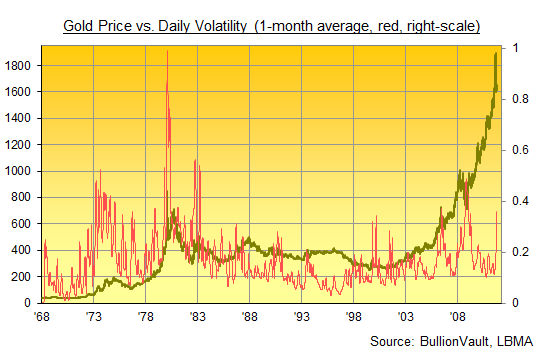
    Gold price over the decades

    USD INR


    Sunday, September 18, 2011

    Indian real estate faces cash crisis

    Financial times reports

    http://www.ft.com/cms/s/0/8f5eda74-e064-11e0-ba12-00144feabdc0.html#ixzz1YMpFUNdU

    Indian real estate faces cash crisis

    Real estate brokers display brochures for luxury apartments to passing traffic in Noida, east of New Delhi, India
    The Indian real estate sector, once the realm of high-risk investments with astronomical returns, is facing a liquidity crisis in the face of escalating commodity prices, interest rates and inflation.
    With the sector carrying a debt burden of about $24.6bn in the year to July 2011 – up almost seven times from $3.8bn in September 2005 – many small- and midsized Indian property groups face the risk of default. Major developers are delaying projects, discounting properties and looking to sell big assets.

    More

    On this story

    “This is one of the worst liquidity crises the sector has ever faced,” says Dipesh Sohani, an analyst at MF Global. “Investors are staying away from the sector as the risk associated with it is too high.”
    DLF, the biggest developer, has been trying to raise as much as Rs100bn ($2.2bn) by selling its non-core assets, such as hotels and land. Its debt burden rose to $4.4bn on the back of a tenfold increase in its interest costs since 2008, according to Bloomberg data. DLF paid Rs25.9bn in interest in the year ending in March 2011, compared with Rs2.78bn in 2008.
    “We are living in a difficult environment,” says Saurabh Chawla, executive director of finance at DLF. “We see some moderation in demand. The cost of capital and cost of mortgages is high.”
    Meanwhile, other major players are having trouble completing their projects and are seeking new buyers. Orbit Corp, which operates mainly in Mumbai, has been seeking potential buyers for its unfinished building in India’s financial capital since the start of August.
    Chart: Real estate debt in India
    In the three months to June, an 8.7 per cent increase in annual industry revenues was accompanied by a nearly 20 per cent annual decline in profits, according to research compiled by Edelweiss Securities, a Mumbai-based brokerage firm.
    In such dire times, the banks have almost stopped lending to the sector, and there are few companies willing to take a high-risk bet on high-priced development projects or buyers able to pay high mortgage rates.
    “Basically, no one is lending to the sector right now because they see a risk attached to it,” says Sharan Lillaney, real estate analyst at Angel Broking. Total banking industry exposure to real estate was 3.1 per cent in July, down from 3.7 per cent in July 2009.
    Meanwhile, residential demand in India’s financial capital dropped to a 30-month low in the second quarter and sales fell 11 per cent during the same period, according to real estate research company Liases Foras.
    Between slumping demand and recalcitrant banks, developers find themselves in a catch 22 situation. “The builder can’t reduce prices because then they have to restructure the loan with the bank [at a higher rate],” says Mr Lillaney. “But they have to reduce prices because otherwise they can’t get any bookings.”
    Many buyers are unable to secure a mortgage because record high interest rates, which India’s central bank raised to 8.25 per cent on Friday – the 12th hike in 19 months – are taking a big toll on the industry. The average loan rate to buy a house in India is 16.5 per cent, according to the Housing Development Finance Corp, India’s largest home lender by revenues, up from 10.25-11.25 per cent in December 2008.
    The industry is facing strong headwinds, says Mr Sohani, including high commodity prices. “Steel and cement ... are up more than 20 per cent, [and] are hitting the companies’ margins,” he adds.
    Ramesh Nair, a managing director for real estate consultancy Jones Lang LaSalle, adds that the government’s Rs3.14 per litre petrol rise would further hurt the industry.
    Those higher costs, coupled with project delays, have caused private equity investment in real estate between April and August to drop by 20.2 per cent – at about $831m, down from $1.04bn during the same period last year – according to Venture Intelligence, a research firm. It all adds up to Indian property launches being down 42 per cent in June compared with the average number of launches in the past 12 months, according to Kotak Institutional Equities.

    Saturday, September 17, 2011

    ‘Residential property prices in Mumbai may correct by 33%’

    Article Link

    "I can see a 33% correction coming in residential property prices in Mumbai, because the market is going to enter a consumer circle," Pankaj Kapoor, managing director, Liases Foras, a real estate rating and research agency, has said. Mr Kapoor was speaking at a workshop on real estate prices, hosted by Moneylife Foundation at the Moneylife Knowledge Centre today.
    =
    Mr Kapoor said that on the basis of current property offtake, Mumbai was in the worst position, while Pune was the best-placed. "Pune's stock can be cleared in 12 months. However, Mumbai will require 40 months," he said. He said that since many financers were shifting to Pune, more capital would be injected in that market and set off speculation. "After a year or so, may be Pune will also see irrational price hikes fuelled by speculation," he said.
    =
    "The problem with most valuations is that they go by the prices next door. So when a developer hears that the adjoining property has been priced at Rs2 crore, he will also hike his own prices. However, he doesn't consider whether sales are actually happening at those prices," Mr Kapoor said. "Even professional valuations are faulty on these accounts. So, inventory piles up, prices rise and the market becomes more lopsided."

    Wednesday, August 31, 2011

    Realtors fear Lokpal will expose nexus with govt

    Aricle Link

    Among many other things, the implementation of a strong Lokpal Bill will expose the nexus between government officials and developers. It will also control the flow of unaccounted black money in the real estate sector, which has been used as a parallel source of funds and income for decades.

    “Developers as a private player will not directly come under the ambit of the Lokpal, but their nexus with the BMC and especially income-tax officials will surely be exposed. The flow of black money is enormous in real estate sector. Buyers frequently become victims of developers who demand black money. Citizens need to be alert and file regular complaints if something amiss is happening,” said noted IPS officer turned activist YP Singh.

    Another developer said, “If we stop accepting black money, then the majority of profits will go in paying huge government taxes. We are not the only ones involved in this wrong practice, Even buyers do so while selling their own flats. They do not mention the real transaction amount in the sale agreement to save on taxes.”

    Thursday, August 04, 2011

    Bombay Dyeing moves into Real estate, Retail

    Parsee business and trusts like Bombay Dyeing, Godrej, Tata hold vast amounts of prime land in Mumbai. These guys are are now unlocking the land value by developing these land parcels and selling these outrageously priced apartments to black money holders. The airline GoAir which is run by Jeh Wadia is a flop airline. I wonder how CNBC TV18 touts it as a successful aviation business. In fact Jeh Wadia had made some disparaging remarks on the poor kids when he started the airline promotions at 500 Rs per seat to Goa. I wonder if he will say the same things about the rich luxury apartment owners who will still be living in 'below the poverty line' apartments as compared to a rich trust fund baby.

    On the retail front with the imminent arrival of supermarket chains like  Walmart, Tesco and CarreFour into the top 6 metro cities of India, I am expecting a big jump in prices for  rentals/outright sales of shops in all major neighborhoods. Indian cities are just the right model for Tesco Express stores (1000-5000 sq ft)  which stock Kirana style items while maintaining high quality standards of goods and customer service. A Tesco Express/Walmart express in every neighborhood is not unthinkable as these guys have the processes and knowhow defined to handle large scale operations smoothly

    Project ‘ Bombay Dyeing Makeover’ has begun under the leadership of Jeh Wadia, the man behind Wadia group’s successful aviation business. CNBC-TV18’s Tanvi Shukla reports that the two key takeaways from the first annual general meeting (AGM) after Jeh Wadia took over as joint Managing Director of Bombay Dyeing is one, their focus on real estate and two, de-focusing from textiles and focusing more on retail part of the business.
    To begin with, real estate is something that management has been talking about. Today they updated the shareholders that construction work has finally begun at the Dadar Spring Mill project. They are also going to be developing the Worli property.

    In an interview Wadia says that high interest rates will put pressure on people buying apartments. “But fortunately for us we don’t have very high volumes, we have low volumes. Also, we are in the luxury end of the spectrum. So I don’t see much of a shortage as far as sales are concerned” he added.

    Talking about the Group’s retail business, Wadia said that the company will now focus on opening more number of stores and introducing higher value added products. He aims at an entire revamp of the retail business, which would probably give them higher margin profitability, something that they haven’t really seen in the textile business for quite a while.
    So Bombay Dyeing seems to be shifting from a textile giant to a company whose core focus will now be in real estate and in retail.

    Wednesday, July 20, 2011

    Thursday, July 07, 2011

    India Real Estate Market About to Crash Or Consolidation?

    Article Link

    It is not easy to find an analyst on the street who will be mildly bullish on the real estate market leave along someone who is irrationally bullish. In a scenario where the market seems to be short the real estate market, the laws of contrarian investing state that “when the whole market is long/short a trade, the trade may not fructify” which is what is happening to the real estate market in India. Fundamentally, the market is poised on a knife edge with multiple triggers slowing the market down. Some of the macro pointing to an imminent fall in real estate market are:

  • 75 bps Rate hike by India central bank in 2011 has had debilitating effect on families who have been thinking of a new house purchase. Rising borrowing costs and inflation are reducing ability of Indian families to purchase a house.
  • With more interest rate hikes from RBI in the offing, macro environment is expected to continue to get tougher. Therefore, the risk of an accelerated downturn in sales still remains.
  • Lower Loan/Equity ratio: RBI has now instructed banks to accept nearly 20% of house value as equity portion from the buyer thus effectively reducing the ability Indian families leverage to buy a home.
  • Developers borrowing cost: Rising borrowing cost have also effected developers who now find it difficult to complete projects.
  • Sunday, June 26, 2011

    Aaj ka Mahabharat.

    Pure Genius